What is Oculoplastic Surgery?
Eyes, Eyelids, Face and almost nothing else!
Since oculoplastic surgeons only deal with problems of this area, they treat the largest number of cases in this region and are therefore the most familiar with the specialised anatomy and physiology of the eyelid region and its relationship to the eye.
It is because of this expertise that oculoplastic surgeons are therefore referred complex cases e.g. failed/unsuccessful previous surgery, revisional blepharoplasties by other surgeons both in the NHS and in private practice.
Mr Cheung is a member of the British Oculoplastic Surgeons Society (www.bopss.co.uk), a fellow of the Royal College of Ophthalmologists (www.rcophth.ac.uk), a fellow of the Royal College of Surgeons of Edinburgh (www.rcsed.ac.uk) and a member of the American Academy of Ophthalmologists (www.aao.org).
Mr Cheung strictly adheres to the recommendations of the General Medical Council on cosmetic surgery
-
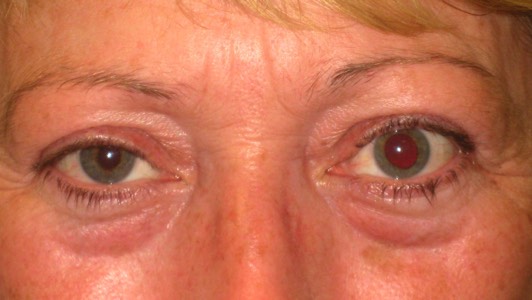
Before complex simultaneous eyelid elevation and lower surgery: Her right eyelid is low from damaged tendon from contact lens wear. Her left upper eyelid is high from tendon scarring from thyroid eye disease
-
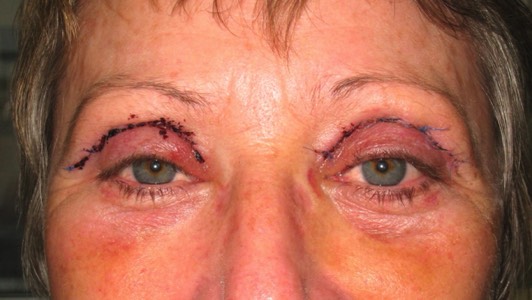
1 week following complex upper eyelid oculoplastic surgery: Consisting of blepharoplasty surgery to both upper eyelids to tidy up any excess skin, elevation of the right upper eyelid (ptosis correction surgery) with left upper lid lower surgery (levator recession)
-
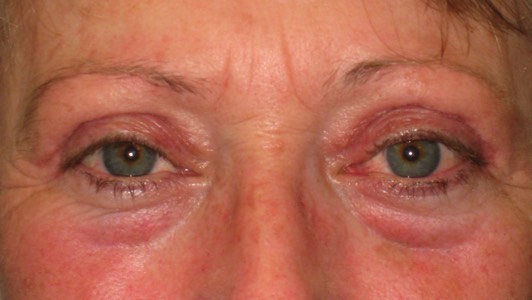
6 weeks following surgery. The patient was over the moon. Her eyelids now show perfect symmetry, contour and height
-
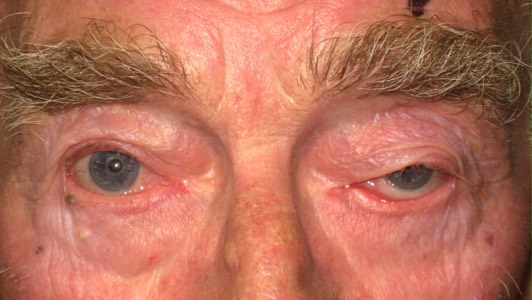
Before complex simultaneous ptosis and cicatricial ectropion correction. Note this gentleman has a droopy upper eyelid (ptosis) and out turning (ectropion) on his same left side. His left upper eyelid is low due to age related stretching of the main tendon. His out turning lower eyelid was due to skin tightness which would therefore require either a flap of skin or skin graft to relieve the tightness. The tightness of the lower lid skin was due to age related descent of the cheek (cicatricial ectropion)
-
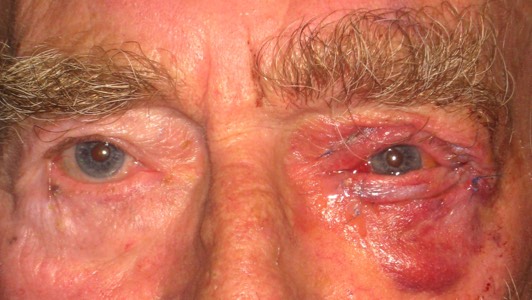
5 days following surgery: The upper eyelid tendon has been repaired and tightened therefore lifting up the upper eyelid (ptosis correction). A flap of excess skin has been moved from the upper eyelid into the lower eyelid thus relieving the lower lid tightness
-
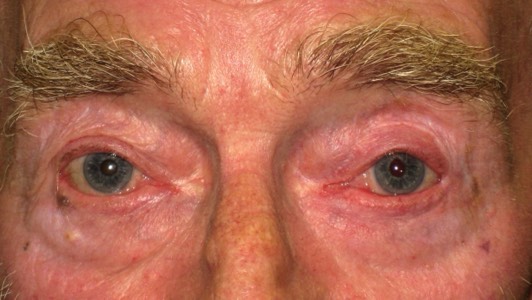
6 weeks following surgery. All the swelling has resolved. The patient was very happy. Both the upper lid ptosis and the lower lid ectropion have been corrected
Most patients who undergo oculoplastic surgery are treated for conditions that affect eye comfort, vision, or ocular health. These procedures are classified as functional or reconstructive surgery and include treatment for ptosis (drooping eyelids), eyelid malpositions such as entropion or ectropion, tear drainage problems, eyelid tumours, trauma, or complications of facial nerve weakness (e.g., Bell’s palsy).
In contrast, purely cosmetic oculoplastic surgery is performed to rejuvenate the appearance of the eyelids or upper face without treating a specific medical or visual problem. Because these procedures are considered aesthetic rather than medically necessary, they are usually self-funded by the patient and not available through NHS commissioning pathways.
As with most cosmetic surgery, this surgery is not absolutely necessary to your health and should therefore be considered very carefully before embarking on it. Mr Cheung strictly adheres to and recommends the advice of the British Oculoplastic Surgery Society on cosmetic surgery and the General Medical Council
Beyond physical symptoms, eyelid appearance can significantly affect psychological well-being and confidence. Feeling uncomfortable with your appearance can influence social interactions, professional confidence, and overall quality of life. For appropriately selected patients, cosmetic oculoplastic surgery can offer meaningful improvements in both appearance and self-confidence, provided expectations are realistic and fully discussed beforehand.
For further information on how to choose your oculoplastic surgeon, visit www.bopss.co.uk.
In 2004, the different UK Royal colleges/societies, which represent the different specialities of surgeons who offer cosmetic surgery, jointly drafted recommendations to help their patients. To download their recommendations click here
The Department of Health website also has very useful pages for patients considering cosmetic surgery click here
Patients with clear functional symptoms — such as impaired vision from drooping eyelids, recurrent infections, eyelash irritation, or tear drainage problems — may be referred through NHS pathways if they meet local commissioning criteria. The General Medical Council expects doctors to share relevant information with other healthcare professionals involved in a patient’s care (such as their GP), as needed for safe, effective treatment, unless the patient objects or there are confidentiality reasons not to share.
Bad plastic surgery is easily recognisable. Instead of enhancing the features it invariably detracts from them. Furthermore, poorly performed plastic surgery in the eyelid region can also prove a threat to the health of the eye and eyesight.
Well performed oculoplastic surgery should be safe for the eye and is often subtly enhancing. Patients commonly report following surgery that their work colleagues still do not know that they have had any surgery done but ask if they have been holiday as they look refreshed in some way.
Oculoplastic surgeons perform a similar range of eyelid procedures, including blepharoplasty and brow lift both in the NHS and in private practice and are recognised accordingly as specialists in surgery in the eyelid region of the face. It is for this reason that they are referred patients, who have had unsatisfactory surgery elsewhere, for revisional work.